Showing posts with label Fruit. Show all posts

Tuesday, December 20, 2011

Christmas Craft

In many Catholic traditions, Epiphany (January 6th), symbolizes the last day for Christmas celebrations. Epiphany Eve (January 5th), in the Italian culture, "La Befana" goes out to visit the children of Italy. In this folklore, the Befana is a witch-like lady who fills the socks of good boys and girls with candy and gifts (usually chocolate, nuts and oranges). It's a cute little tradition that is very similar to the gift giving of the more familiar Santa Claus.

Given that the Christmas celebrations are still being held in some cultures, there is rather simple and crafty idea that you can do during this time. It has turned out to be a holiday tradition in my home.


The sight and smell of certain foods can conjure up memories of times past. For me, there are particular smells that remind me of the winter holiday season.

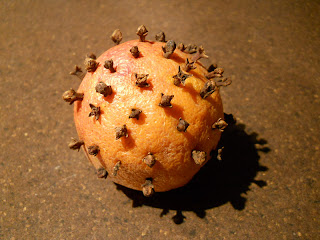
Begin with an ordinary orange.


You will also require a handful of cloves. Pierce the orange with the cloves all the way around the surface of the fruit. (You can also get craftier by creating patterns around the orange.)

The orange and cloves together will create a natural air freshener which will leave your home smelling spicy and warm.

Also, don't worry about the orange going bad. The cloves will actually petrify the fruit and turn it into a hard ball.

Friday, December 16, 2011

Ramfal

While at a market in Chinatown today, I was able to find some Ramfal. After reading my blog entry about Sitafal, you will know that Ramfal is it's "counterpart" fruit. (To read my entry on Sitafal, click here.) This fruit may also be known as "soursop" or "guanabana".

It is a larger fruit compared to the Sitafal; this one being approximately twice the size. As you can see, the outer skin is somewhat different, in that it is not compartmentalized. The outer layer is also smoother and shinier than the one of the Sitafal.


Getting to the inside of this fruit is also much easier. It simply needs to be cut in half.


Once cut, the fruit can be eaten right off the skin. The texture is kind of a combination of 'banana meets bread'. In any case, it still has its characteristic custard-like flavour (as does the Sitafal).


This fruit contains many smooth, brown seeds, which are not meant to be eaten.


Ramfal goes very well with mixed drinks, smoothies, yoghurt and ice cream.

Sunday, December 4, 2011

Sitafal

All this cold weather is making me crave exotic fruit. It's probably because my body really wants to be in a tropical climate and not in the Great Cold North.


Next time you are looking for exotic fruit, step away from the mangoes and papayas. Try a Sitafal instead.


I am using the Indian name for this fruit. Sita was the wife of Ram (both being Hindu deities). The name Sitafal literally means "Sita fruit".


In case you were wondering, there is a Ramfal as well. Looking relatively similar, the Sitafal has a bumpier exterior, where her husband has a smoother outside texture.


Sitafal may be otherwise known as a "sweetsop", "sweet-apple" or "custard-apple", among others. This and other apple-suffixed fruit are known all over the English speaking world. To my understanding, the word apple was used, at one point in time, to name newly discovered fruit. Think of a pineapple. It's neither a pine nor an apple, but it somehow works.


In any case, the fruit somewhat resembles an artichoke. (I'm sure the name "artichoke-apple" didn't sound very appetizing.)

When ripe, the fragile and almost crumbly exterior can be removed easily with a little pressure.

Once all of it is removed, the Sitafal will be ready to eat.

The fruit is made up of tiny sections or pockets containing smooth, black seeds. (The seeds are not edible.)


Seeing the fruit in this form, it becomes obvious why some call it a "custard-apple". Each little pocket of fruit has a custard-like quality. It is sweet and milky; an unusual flavour in fruit.


These fruit can be found, somewhat easily, in grocery stores catering to the Asian market in and around the Greater Toronto Area.


Take a good look, because it could be called just about anything! Just make sure to pick one that is a bit soft and has a little give to ensure that it is ready to eat.

Tuesday, April 19, 2011

Forbidden Fruit

It was like I found a box of gold! Technically, I did. For those of you who remember my posting about cactus pears, you will note that different varieties are available. (For my entry on cactus pears, click here).

Once in a while, in the grocery store, I've come across these yellow-green cactus pears and thought that they were too unripe to eat. Little did I know that they were actually the illusive golden prickly pears that I have been searching, for years, to find! These particular ones were from South Africa.

Unlike red cactus pears (the most commonly found variety), these fruit have a somewhat sweeter flavour, with hints of pineapple and banana. I also found that this variety was "pricklier" than other varieties, as I was left with some war wounds. (I'll do anything for a good meal and, yes, it was worth it!)

Another potentially wounding fruit, I was able to capture, is the loquat or nespoli. This orange fruit has the shape of a small pear and the taste of a mixture of apricots, plums and grapes.

This small fruit also has some parts to be aware of. As you can see, the center contains some seeds. Well, more than you think.

This little guy produced eight seeds. It is commonly known that this fruit is thought to contain approximately 30% waste. Another thing to know is that the seeds contain small amounts of cyanide (Life always comes with balance.) Apparently, they are comparable to apricot kernels, which also contain some amount of cyanide. So, some people advise not to consume, chew, or suck on, the seeds.

However, I have seen recipes where loquat seeds are saved and used in culinary purposes to provide a cherry-like flavour. I have seen recipes calling for loquat seeds to be stuffed in chicken and duck, as well as, used to flavour vodka.

Until a recognized case for "death by loquat seed" is found, I'm game for a try!

Friday, February 18, 2011

Niçoise olives

What amazing weather we experienced today in Toronto! It reminded me of the famous winters of Nice, in Mediterranean France.
 (Yes, people actually go to the beach in the winter time!)


For me, another reminder of Nice are Niçoise olives. I have actually been looking for these special olives for over a year. I found them at St. Lawrence market. They were available in two varieties; pitted and whole. I prefer the latter.


This delicacy can easily be considered the best olive in France. As you can see below, they are incredibly small and have a colour range between purple-black to brown. They have a rich, salty-nutty flavour and are usually found in oil. They have a firm texture and are frequently served before meals in Southern France.


If you are able to find Niçoise olives, try using them:
- as an appetizer
- in tapanade
- by incorporating them in a tomato sauce
- as an addition to salads (especially, in the famous Niçoise salad)


Enjoy the weather while it lasts!

Saturday, February 5, 2011

Tilapia avec le fenouil et les oranges sanguines

Fennel and blood oranges are an incredible pair. I often use this duo in salads, but I also cook with them.


Fennel can be bought in bulb form. This vegetable has the crunch and fibrous quality of celery, with a subtle licorice flavour.


All parts of the fennel can be eaten including the bulb, core, stems and leaves. The stems and leaves actually work quite well with this particular recipe, but feel free to use any part of the vegetable.


Wash, cut and arrange some fennel pieces on an aluminium foil-lined baking tray.


Lay some tilapia fillets directly on top of the stems and leaves. Tilapia is a mild flavoured, freshwater fish is available in most supermarkets. I have used both frozen and fresh tilapia for this dish and they both come out wonderfully.


Season the fish with some sea salt, red chili flakes (optional), and a generous amount of olive oil.


Place sliced blood oranges on top of the fillets. If blood oranges are not available, regular oranges will do. (If you do not have any oranges, you may use lemons, but note that you will be making a completely different dish.)


Bake the fish in an oven until the fish is tender and flakes easily.


This dish is quick, flavourful and yummy! I often serve it with basmati rice with peas and a few olives on the side.

Bon appétit!

Tuesday, January 25, 2011

A papaya puesta, papaya partida

Papaya is a tropical fruit that is full of natural enzymes that break down food. These enzymes have been used in supplements to aid digestion. I like to use this particular property of the fruit for another purpose; marinades.


You can create a simple marinade, as I did, using the following ingredients:
- half a small ripened papaya (chopped and mashed)
- the juice of half a lemon
- olive oil
- chili powder
- red chili flakes
- freshly ground black pepper
- salt (to taste)
- thyme


Speaking of time, you will also need some of that. Place some skinned chicken pieces in a bowl and cover it with the marinade. (I used four quartered boneless chicken thighs.) Cover it with plastic wrap and leave it to sit in the fridge for 12-24 hours.


Transfer the contents to a roaster, cover and place it in an oven set to 350°F. Cook the chicken until it reaches an internal temperature of 182°F.


Note: Never take chances with chicken. Always use a meat thermometer!


The result will be an incredibly tender and juicy chicken.


Feel free to cook this chicken in any other way, including:
- barbecuing
- grilling
- broiling
- pan frying


Enjoy the papaya chicken with your favourite starch. A great combination is having it with cornbread. My recipe will be coming soon.

Friday, January 7, 2011

June, where's my lunch?

While I was in an open-air market in Florida, USA, I came across a strange type of fruit which I had never seen before.


When I asked a particular vendor its name, I received the reply of "Chinese olive". This name caught my attention, as I am quite obsessed with olives in general. 

(Of course this was after my initial and cynical reaction to any fruit or vegetable that is improperly labeled "Chinese [insert common name here]", e.g. Chinese apple, Chinese cabbage, Chinese lettuce, etc. I find it to be a quick label for anything edible, found in Asia, that has a resemblance to something else in North America or Europe.)

In any case, I went on to ask the vendor if they needed to be cured or cooked in any way, as olives are not eaten raw. He stated that they didn't and I proceeded to try one on the spot. It was not an olive, by any stretch.

As you can see, they are quite large to be compared to any variety of olive. Also, they do not contain any pits or seeds.

After doing a little research, I found that they are actually called June plums, a.k.a. embe-ke-zungu, in Swahili. The name translates to "white mango", which is a much better description of the fruit. When in this state, the fruit has a slightly sour flavour, resembling a mix between green (unripened) mangoes and plums. The skin is also edible.

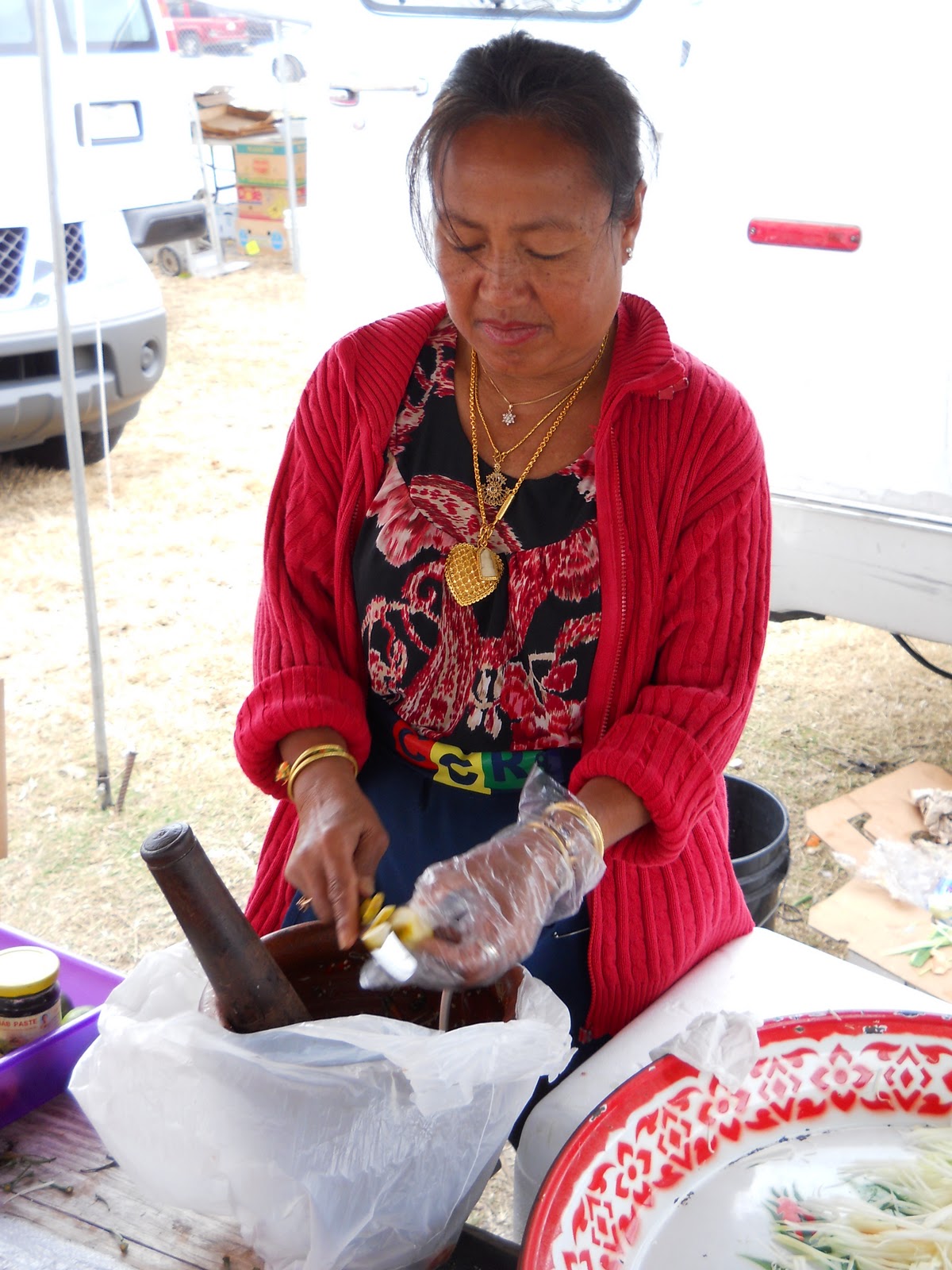
Fortunately, I came across a woman from Laos making a type of salsa with June plums. She sliced the fruit into a mortar and pestle.


She added julienned green papaya,...


green chilies,...


tomatoes and limes.


It looked delicious and when I asked her what she was making, she simply replied, "lunch."


June plums are normally eaten with a little bit of salt and pepper or salt and red chili powder. They also make a nice contribution to fruit salad.


When ripe, the fruit turns sweet and can be used to make juice and cocktails.


Great, now I want some lunch!

Thursday, January 6, 2011

Orange you glad to see me?

I recently visited Florida, USA to do a little cross-border eating. Visiting the state during the autumn or winter months is fantastic, not just because of the weather, but because it marks harvest season for a number of citrus fruit.


Locals often have citrus trees growing in their yards, like this tangerine tree seen below. The fruit it bore was easy to peel and incredibly sweet. You really can't beat fruit that has been ripened on the tree!


Another harvest fruit was the grapefruit. Honestly, I cannot palate the grapefruit available in Canada. To the contrary, fresh Florida grapefruit is divine. It is actually so sweet that it can taste very similar to an orange!


If you are visiting and do not have access to privately-owned citrus trees, feel free to visit a local open-air market. The one I visited was called Wagon Wheel Flea Market, which was located in St. Petersburg, Florida.


As you can see, a large variety of fresh citrus was available.


You could also purchase trees bearing citrus fruit in the market!


The market vendors often allow you to taste the fruit before you buy.


One variety of citrus that you must try is the pomelo. Pomelos are football-sized fruit weighing approximately 1-2 kilos.


The fruit is very similar to a grapefruit, but having a milder flavour. The membrane tends to be tough and is not readily eaten. The meat of the fruit can be either pink or white. Both are delicious.


I saved the best for last!


Blood oranges are, by far, my favourite of all citrus fruit.

As you can see, they have a wonderful dark red colour compared to their orange counterparts. They are a great source of vitamin C and many varieties are available with flavours ranging from sweet to tangy.

Blood oranges are readily used in European cooking and an amazing way to serve them is by making a salad. Simply slice the meat and top the pieces with a high-quality extra virgin olive oil and some sea salt. The olive oil and sea salt really help to bring out the flavours. Blood orange salad is bloody good!

Sunday, December 19, 2010

Ho! Ho! Ho! Dairy Christmas!

Dulce de leche is a Spanish version of caramel and is very popular throughout Latin America. It translates directly to, "sweet of milk". I would describe this treat as the Nutella of the Latin world. I have seen this product for sale at a number of stores, but I actually find it quite easy to make. (It actually tastes better when it's homemade!)

Begin with a can of sweetened condensed milk.


Sweetened condensed milk is basically evaporated milk with sugar added to it. It is incredibly thick and has a wonderful butterscotch colour.

Sidebar: This recipe calls for the slow heating of the condensed milk. For years, I had made dulce de leche directly in the can; a direction I know that has been followed by many Latinos. However, I have been told that heating cans in this manner can leech chemicals from the canning process into the food. This process is not advisable and therefore, I have augmented the recipe.


Proceed to transfer the sweetened condensed milk into a clean preserving jar and seal the lid tightly.

Place in the filled jar into a pot filled with water. Be sure to submerge the jar completely. Now, slowly boil the closed jar for a two hour period of time.


Note: You may need to top your pot with hot water intermittently throughout this process.

The bath is used to control the cooking temperature. The heat from the boiling water will caramelize the sugars within the sweetened condensed milk, making the liquid turn a caramel colour. You will be left with the best tasting, thick, mouth watering caramel ever!


Caution: Let the jar cool completely before opening. If you do not, the caramel will explode out, potentially causing severe burns to the skin.

Enjoy your homemade dulce de leche on:
- cakes
- muffins
- cookies
- pies
- toast
- ice cream


My absolute favourite way to savour the caramel is in the traditional dish called brevas con queso (figs with cheese).


Fig trees produce two harvests. The Spanish consider the fruit from each harvest as a separate type of fig.  The first harvest produces figs called "brevas", whereas the second produces "higos". The fruit of the first harvest is often found in a preserved form where they are submerged in a heavy syrup. This product can be found quite readily in stores catering to the Latino market.

As you can see, the brevas are completely saturated with sugar syrup, giving them a soft and tender texture.

Combine the brevas with queso fresco (fresh farmer's cheese) and your homemade dulce de leche to experience a taste that will satisfy the end of any meal.

¡Buen Provecho!